Common signs you need a chimney sweep include a smoky smell even when the fireplace isn’t in use, smoke backing up into the room, visible soot or creosote buildup, and slow-burning or difficult-to-start fires. Catching these early helps avoid bigger safety risks and repair costs.
Most people don’t think about their chimney until something feels off. The problem is that by the time it’s obviously not working right, buildup or damage has often been developing for a while already.
7 Signs Worth Paying Attention To
- A persistent smoky or campfire smell, even when the fireplace isn’t lit
- Smoke drifting into the room instead of drawing up the chimney
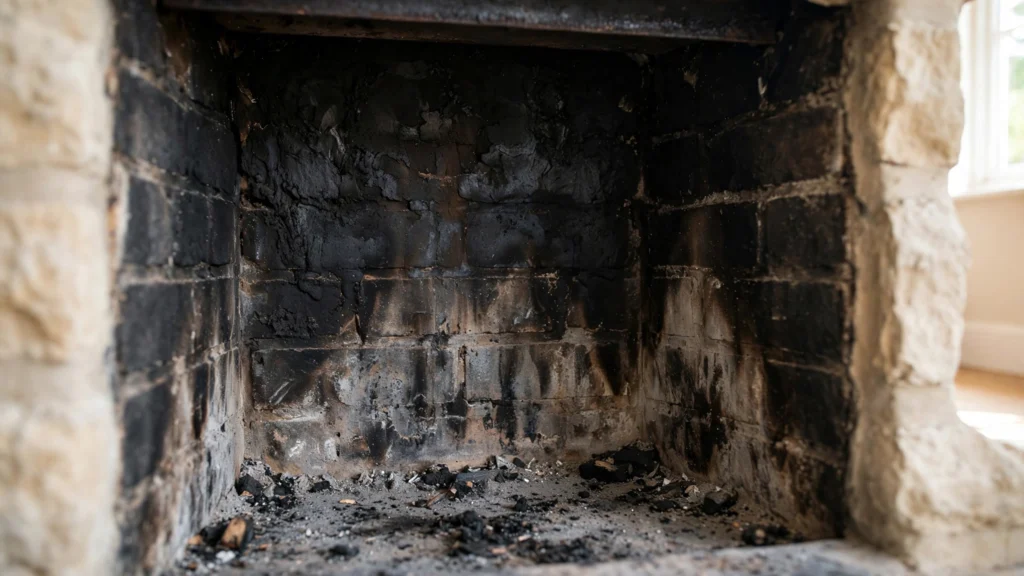
- Visible black, flaky, or tar-like buildup inside the firebox or flue
- Fires that are difficult to start or burn unevenly
- Fine soot or debris settling on nearby furniture or the mantel
- Any animal sounds or nesting material visible in the flue
- A damaged, cracked, or rusted damper that doesn’t open or close properly
Why the Smell Alone Is Worth Acting On
A lingering smoky odor, even without a fire burning, usually means creosote has built up enough to off-gas into the room, especially in humid weather. This is one of the more common early signs that cleaning is overdue.
What Happens If These Signs Are Ignored
Beyond the smell and reduced draft efficiency, ignoring these signs increases the risk of a chimney fire, since creosote is highly flammable. Structural cracks left unaddressed can also allow heat or sparks to reach nearby combustible materials in the home’s structure.
How Often This Should Come Up If You’re on Schedule
If you’re keeping up with regular inspections, these signs shouldn’t come up often. I covered a realistic cleaning schedule based on usage in how often to clean your chimney, which is worth checking if you’re not sure when your last cleaning was.
What to Expect From a Professional Visit
A chimney sweep will typically inspect the full flue, remove buildup, check for structural damage, and confirm the damper and venting are working properly. If you’re curious what this tends to cost, I broke it down in my chimney sweep cost guide.
Frequently Asked Questions
Is a smoky smell always a sign of a problem
Not always immediately dangerous, but persistent smell when the fireplace isn’t in use is worth having checked rather than ignored.
Can I inspect my own chimney for these signs
A basic visual check from the firebox is reasonable, but full flue inspection typically requires professional tools and training to do safely and thoroughly.
Are these signs different for gas fireplaces
Gas fireplaces show different warning signs, like unusual odors or pilot light issues, but professional annual inspection is still recommended either way.
Noticed any of these signs?
Calls placed through the link above may be routed to third-party service providers. NestWellPro may receive compensation for calls generated through this listing.