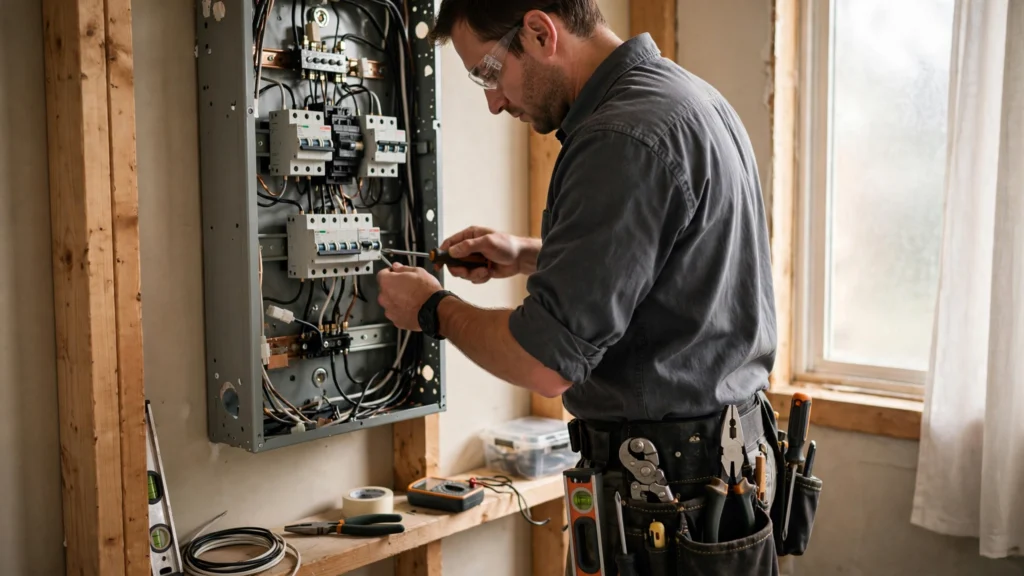
Electrician cost per hour typically ranges from $50 to $100 for a standard licensed electrician, with rates reaching $100 to $150 per hour for master electricians or emergency after-hours calls, plus most electricians charge a flat trip or service call fee separate from hourly labor.
Electrical work pricing can be confusing because rates vary by experience level, time of day, and whether the job is billed hourly or as a flat rate. Here’s a realistic breakdown to help you budget before calling anyone.
Cost by Electrician Type
- Apprentice or junior electrician (supervised work): $40 – $60 per hour
- Licensed journeyman electrician: $50 – $100 per hour
- Master electrician: $100 – $150 per hour
- Emergency or after-hours call: $150 – $250 per hour, often with a minimum charge
Flat Fees vs. Hourly Billing
Many electricians charge a flat trip or service call fee, typically $75 to $150, that covers the visit itself, with hourly labor billed on top for the actual work. Some jobs, like installing a single outlet or ceiling fan, are sometimes quoted as a flat rate instead of hourly, which can be easier to budget for upfront.
What Affects the Total Cost
- Job complexity: Simple repairs like outlet replacement cost far less than panel upgrades or full rewiring.
- Permits: Electrical work involving panel changes or new circuits often requires a permit and inspection, adding both cost and time.
- Time of service: Evening, weekend, or emergency calls typically carry a premium over standard business-hours rates.
- Home age and wiring condition: Older homes with outdated wiring (like knob-and-tube or aluminum wiring) often take longer to work on safely, increasing labor time.
Common Job Price Ranges
- Outlet or switch replacement: $75 – $200 per fixture
- Ceiling fan or light fixture installation: $150 – $350
- Circuit breaker panel upgrade: $1,200 – $2,500
- Whole-house rewiring: $3,500 – $8,000+ depending on home size
Is It Worth Doing Electrical Work Yourself?
Minor tasks like replacing a light fixture with the breaker off can be manageable for confident DIYers, but anything involving the panel, new circuits, or wiring inside walls carries real safety risk and often legal permit requirements. The National Fire Protection Association notes that electrical issues remain a leading cause of home fires, which is a strong argument for licensed work on anything beyond basic fixture swaps.
Frequently Asked Questions
Why do emergency electrician rates cost so much more
After-hours and emergency calls require the electrician to prioritize your job outside normal scheduling, which is reflected in higher rates, often double standard daytime pricing.
Is it cheaper to bundle multiple electrical jobs into one visit
Usually yes, since you avoid paying multiple trip fees, and the electrician can often complete several small tasks more efficiently in a single visit than across separate appointments.
Do all electrical jobs require a permit
No, minor repairs like fixture or outlet replacement typically don’t require permits, but panel upgrades, new circuits, and rewiring usually do, depending on local building codes.
Ready to get an electrical quote?
Calls placed through the link above may be routed to third-party service providers. NestWellPro may receive compensation for calls generated through this listing.