There is a particular frustration that comes with worrying about your hearing: so much of it feels out of your hands. You can’t undo the concerts of your twenties, you can’t silence a ringing ear by wishing, and you can’t rewind age.
Then, somewhere between a blood test and a long conversation with an audiologist, I noticed something encouraging. Of all the things that influence ear health, the food on your plate is the one lever that is completely, unglamorously, yours. Not a cure. Not a miracle. But three times a day, you get a small vote in how well your inner ear is fed, oxygenated, and protected — and those votes add up.
This guide walks through the foods for hearing health that audiologists and nutrition researchers talk about most, why each one matters to your ears, and — because good intentions die in complicated recipes — the easiest ways to actually eat more of them.
First, How Does Food Even Reach Your Ears?
Your inner ear is a tiny, hardworking structure. Deep inside it sits the cochlea, a snail-shaped organ lined with thousands of microscopic hair cells. These cells bend with sound and turn it into electrical signals your brain understands as hearing. Two things keep them alive: a steady blood supply, and protection from everyday wear and tear.
Blood flow is the delivery service. The cochlea depends on very small blood vessels and has almost no backup supply, so whatever the blood carries is what the hair cells get. This is why circulation-friendly habits matter so much for ears, and why our guide to how to improve blood circulation to your ears is one of the most-read pieces on this site. Nutrients like folate and omega-3s support healthy blood vessels, which keeps the delivery service running on time.
Antioxidants are the clean-up crew. Noise, aging, and normal metabolism generate unstable molecules called free radicals. In excess, they damage delicate cells — including those hair cells, which, once lost, do not grow back. Antioxidant nutrients (vitamins A, C, and E among them) help neutralize free radicals. Large long-term studies following tens of thousands of women over more than two decades have linked Mediterranean-style and DASH-style eating patterns with a meaningfully lower risk of hearing decline. No single food did that. The overall pattern did.
We’re building a pattern here, not hunting for a magic ingredient.
1. Leafy Greens — For Folate
Spinach, kale, romaine, bok choy, collards. If your ears could place one standing order, it might be for leafy greens.
Their star nutrient is folate (vitamin B9), which helps the body keep homocysteine — an amino acid that, at high levels, is unfriendly to small blood vessels — in a healthy range. Better vessel health means better oxygen delivery to the cochlea, and low folate has repeatedly been associated with age-related hearing changes.
Easy ways to eat more: Blend a handful of spinach into a morning smoothie (you genuinely won’t taste it under banana and berries). Stir chopped kale into soups and pasta in the last five minutes. Make “a handful of greens on the plate” the default next to any lunch.
2. Fatty Fish — For Omega-3s
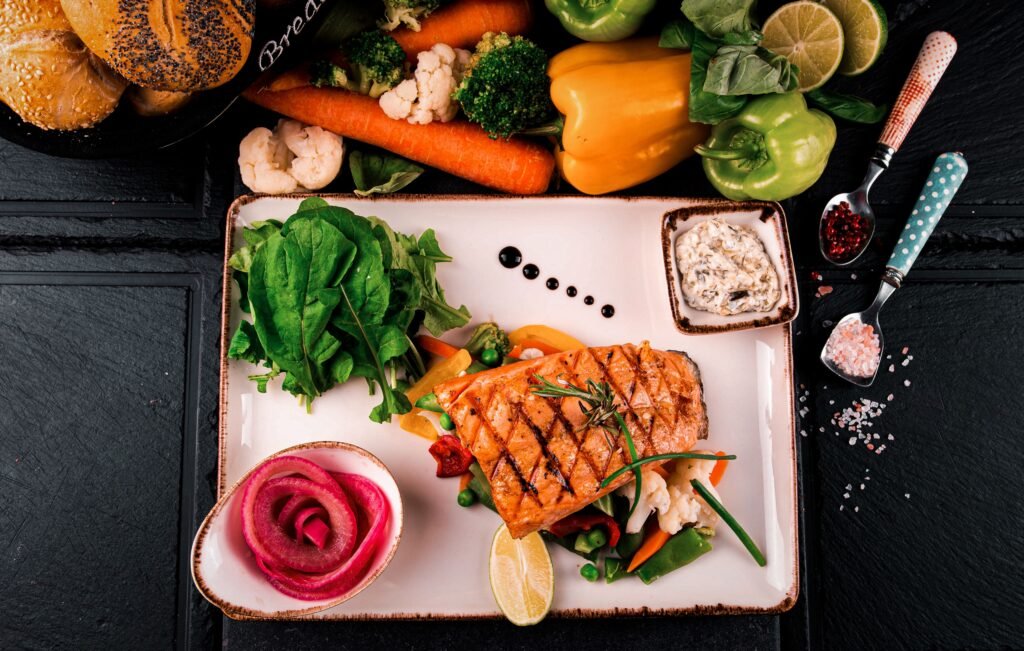
Salmon, sardines, mackerel, trout, tuna. Omega-3 fatty acids are famous for heart health, and your ears benefit from the same machinery: they help keep blood vessels flexible and inflammation in check, supporting the inner ear’s tiny circulation, and they nourish the auditory nerve pathway that carries signals to the brain. Cohort research has consistently linked eating fish a couple of times a week with a lower risk of age-related hearing loss.
Easy ways to eat more: Aim for two fish meals a week, and make one of them low-effort: tinned sardines on toast with lemon and chili take four minutes and cost very little. If fish truly isn’t your thing, walnuts, flaxseeds, and chia seeds offer a plant-based omega-3 (ALA) — a different form, but still genuinely useful.
3. Bananas, Potatoes, and Yogurt — For Potassium
A quick bit of inner-ear plumbing most people never hear about: the cochlea is filled with a special fluid, and that fluid’s balance helps convert sound vibrations into nerve signals. Potassium regulates fluid levels throughout the body — including in the inner ear — and supports the neural signaling your hearing depends on. Our potassium levels tend to drift downward as we age, which makes topping up through food a sensible habit.
Easy ways to eat more: The humble banana is the classic. Potatoes — especially with skins on — are quietly excellent, as are sweet potatoes, white beans, oranges, and plain yogurt. A baked potato with yogurt and herbs is a potassium-rich lunch that feels like comfort food, because it is.
4. Nuts and Seeds — For Magnesium, Zinc, and Vitamin E
Almonds, walnuts, cashews, pumpkin seeds, sunflower seeds. This group is a three-for-one deal.
Magnesium helps protect hair cells from the stress of loud noise and supports healthy blood flow to the cochlea. Zinc supports the immune system and the cell growth and repair that help your ears fight off infections (not just a childhood problem). Vitamin E adds antioxidant protection for cell membranes.
Easy ways to eat more: A small handful of mixed nuts replaces crisps with something your ears would vote for. Sprinkle pumpkin seeds over salads and soups for crunch. Stir nut butter into oatmeal. One honest caution: nuts are calorie-dense, so “a handful” means a handful, not the whole bag in front of a film.
5. Brightly Colored Produce — For Antioxidants
Berries, citrus fruits, bell peppers, carrots, sweet potatoes, tomatoes. Simple rule: the deeper the color, the richer the antioxidant payload.
Vitamin C (citrus, peppers, strawberries) supports immune defenses and blood vessel health. Beta-carotene and other carotenoids (carrots, sweet potatoes) convert to vitamin A and are studied for helping protect cochlear hair cells from oxidative damage. Together with vitamin E, this is the classic antioxidant team that keeps showing up in hearing research.
Easy ways to eat more: Keep frozen berries — cheap, long-keeping, and ready to go straight onto yogurt or oatmeal. Add a pepper or cherry tomatoes to any sandwich. Roast a tray of sweet potato wedges on Sunday and reheat them all week. For the supplement-level detail on these vitamins, our overview of vitamins for hearing health goes deeper — but food first, always.
6. Eggs and Dairy — For Vitamin B12
Vitamin B12 helps maintain the nerves — including the auditory nerve — and the protective coating around them. This matters more than it looks: B12 deficiency is surprisingly common in older adults and in people who eat little or no animal food, and low B12 has been linked in several studies with tinnitus and hearing difficulties. It’s one of the first levels worth asking a doctor to check if ringing starts.
Easy ways to eat more: Eggs are the easiest win — breakfast, egg-fried rice, a frittata using up the week’s vegetables. Milk, yogurt, and cheese all contribute. If you eat fully plant-based, treat fortified foods (plant milks, nutritional yeast, fortified cereals) as non-negotiable, and ask your doctor about testing your B12 level once in a while.
7. Beans and Lentils — For Folate, Zinc, and Potassium in One Pot
Lentils, chickpeas, black beans, kidney beans. Few foods stack as many ear-relevant nutrients per spoonful: folate for circulation, zinc for immune support, potassium for inner-ear fluid, plus fiber and plant protein that keep blood sugar steadier — and steady blood sugar is kind to small blood vessels everywhere, ears included.
Easy ways to eat more: Lentils are the gateway legume — no soaking, cooked in 20 minutes. Add a tin of chickpeas to curries and salads. Make one soup a week a bean soup. Tinned beans count; just rinse them to wash away some sodium (more on that below).
8. Dark Chocolate and Oysters — The Enjoyable Zinc Sources
Yes, really. Dark chocolate contains both zinc and magnesium, and oysters are among the most concentrated zinc sources in any food (beef is another solid option). A square or two of dark chocolate — 70% cocoa or higher — after dinner is a pleasure that happens to pull nutritional weight. Oysters are an occasional treat for most of us, but if you enjoy them, your ears approve.
An Ear-Friendly Day of Eating
Reading about nutrients is one thing; seeing them on an actual day is another. Here’s a simple, ordinary day built from the foods above — nothing exotic, nothing expensive:
- Breakfast: Oatmeal with banana, walnuts, and ground flaxseed; a boiled egg on the side.
- Lunch: A big spinach and chickpea salad with tomatoes, bell pepper, pumpkin seeds, and an olive oil–lemon dressing.
- Snack: A small handful of almonds and an orange — or plain yogurt with frozen berries.
- Dinner: Baked salmon (or sardines on toast) with sweet potato wedges and steamed broccoli.
- After dinner: A square of dark chocolate. Because this is a life, not a punishment.
Notice what’s missing: any supplement, powder, or specialty product.
What to Limit (Gently)
Supporting your ears is as much about subtraction as addition — kept in proportion:
- Excess sodium. Very salty diets contribute to high blood pressure, which strains the same small blood vessels your cochlea depends on. The biggest sources aren’t your salt shaker; they’re processed foods, ready meals, and deli meats. Cooking at home a bit more shifts this more than any other single change.
- Very high sugar intake. Diets heavy in added sugar are linked with inflammation and with type 2 diabetes, which itself is associated with higher rates of hearing problems — it can affect both the blood vessels and nerves involved in hearing. You don’t need to ban dessert; just let it be dessert, not a food group.
- Alcohol, in excess. Heavy drinking affects circulation and can leave ears ringing louder the morning after. If you notice a pattern between drinking and worse tinnitus, believe your own data.
And one non-food item for this list, because it matters more than everything above combined: turn the volume down. No diet can out-eat regular exposure to damaging noise. Earplugs at concerts and around power tools are hearing health, too.
When Food Isn’t the Answer: See a Doctor
Nutrition supports healthy ears; it does not diagnose anything. Book a hearing test with an audiologist — and don’t wait months — if you notice hearing changes in one ear only, sudden hearing loss (this one is urgent, ideally seen within days), persistent or worsening tinnitus, dizziness alongside hearing changes, or ear pain or discharge. Our rundown of signs your ear health needs support can help you decide what’s worth flagging.
Frequently Asked Questions
Can eating these foods reverse hearing loss or stop tinnitus?
No — and be wary of anyone who promises otherwise. No food or diet has been shown to restore lost hearing or cure tinnitus. What a nutrient-rich diet can do is support the blood flow, nerves, and cell protection your remaining hearing depends on, and it’s consistently associated in research with slower age-related decline. Think of it as maintenance, not repair.
How long before diet changes make a difference?
Think in months and years, not days. These nutrients support long-term vascular and cellular health, and the research linking diet to hearing follows people over years. The consolation: the same pattern also supports your heart, brain, and energy — your ears are never the only winners.
Should I take a “hearing supplement” instead of changing my diet?
Food first. Whole foods deliver these nutrients in combinations the body handles well, alongside fiber and hundreds of other compounds no pill replicates. If a blood test shows a deficiency, then a supplement makes sense — guided by your doctor, not an advertisement.
The Bottom Line
Foods that support hearing health aren’t exotic: greens, fish, beans, bananas, nuts, berries, eggs. You’ve eaten all of them before — probably just not on purpose. The shift is small: build ordinary meals so folate, omega-3s, potassium, magnesium, zinc, and antioxidants show up most days, keep salt and sugar in check, and let your ears enjoy the same circulation-friendly pattern your heart already wants.
Your hearing deserves professional care when it changes — that part is non-negotiable. But breakfast? Breakfast is yours.
Disclaimer: This article is for general information and education only and is not medical advice. It does not diagnose, treat, or cure hearing loss, tinnitus, or any other condition, and is not a substitute for guidance from a qualified healthcare professional. If you notice changes in your hearing — especially sudden or one-sided changes — please see a doctor or audiologist promptly.

Roshan Rao is a wellness researcher who writes practical, research-based guides on health, sleep and family life.