Signs you need new flooring include visible water damage or warping, persistent squeaking or soft spots, deep scratches or worn finish that won’t buff out, outdated material that no longer fits the space, allergy or dust issues from worn carpet, and uneven or cracked surfaces that pose a trip hazard.
Flooring wears down gradually, which makes it easy to overlook until small issues become bigger, more expensive problems. Here’s what typically signals it’s time to replace rather than repair.
1. Water Damage or Warping
Cupping, buckling, or discoloration in wood or laminate flooring usually means moisture has gotten underneath the surface. Left alone, this can spread to subflooring and become a much larger repair.
2. Squeaking or Soft Spots
A floor that squeaks in multiple spots or feels soft underfoot often points to subfloor damage, not just a surface-level issue that refinishing can fix.
3. Deep Scratches or Worn Finish
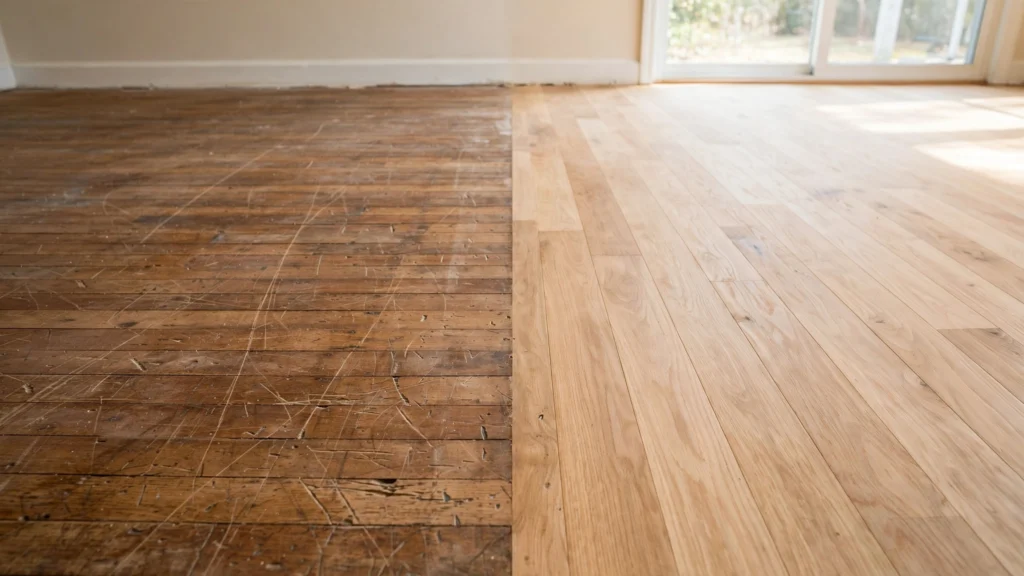
Light scuffs can often be buffed out, but deep gouges, especially on hardwood that’s already been refinished once or twice, usually mean the wood has worn too thin for another refinish.
4. Outdated Material or Style
- Flooring that doesn’t match a renovated kitchen or bathroom nearby
- Material choices (like older vinyl or heavy carpet) that feel dated compared to current trends
- Flooring that limits how you can update the rest of the room
5. Allergy or Dust Issues
Old carpet accumulates dust, allergens, and odors deep in the padding that regular cleaning can’t fully remove, which can be a factor for households with allergies or asthma.
6. Uneven Surfaces or Trip Hazards
Lifted edges, cracked tile, or uneven transitions between rooms aren’t just cosmetic, they’re a real safety concern, especially in homes with young children or older adults.
7. It No Longer Fits the Room’s Use
A room that’s changed purpose, like a home office converted from a bedroom, often benefits from flooring suited to its new use, more durable material for high traffic, for example.
What Replacement Typically Costs
Once you’ve spotted one or more of these signs, cost is the natural next question, and it varies significantly by material and square footage, similar to driveway repair costs covered in our driveway repair cost guide.
Frequently Asked Questions
Can squeaky floors be fixed without full replacement
Sometimes, minor squeaks can be fixed by securing loose boards to the subfloor, but persistent squeaking across a large area often points to a bigger subfloor issue.
How do I know if water damage is serious enough to require replacement
Visible warping, soft spots, or a musty smell usually mean the damage has gone beyond the surface and replacement is the safer long-term option.
Is old carpet actually a health concern
Carpet older than 8 to 10 years can hold significant dust, allergens, and odor buildup that regular vacuuming doesn’t fully remove, which can affect indoor air quality.
Ready to upgrade your flooring?
Calls placed through the link above may be routed to third-party service providers. NestWellPro may receive compensation for calls generated through this listing.