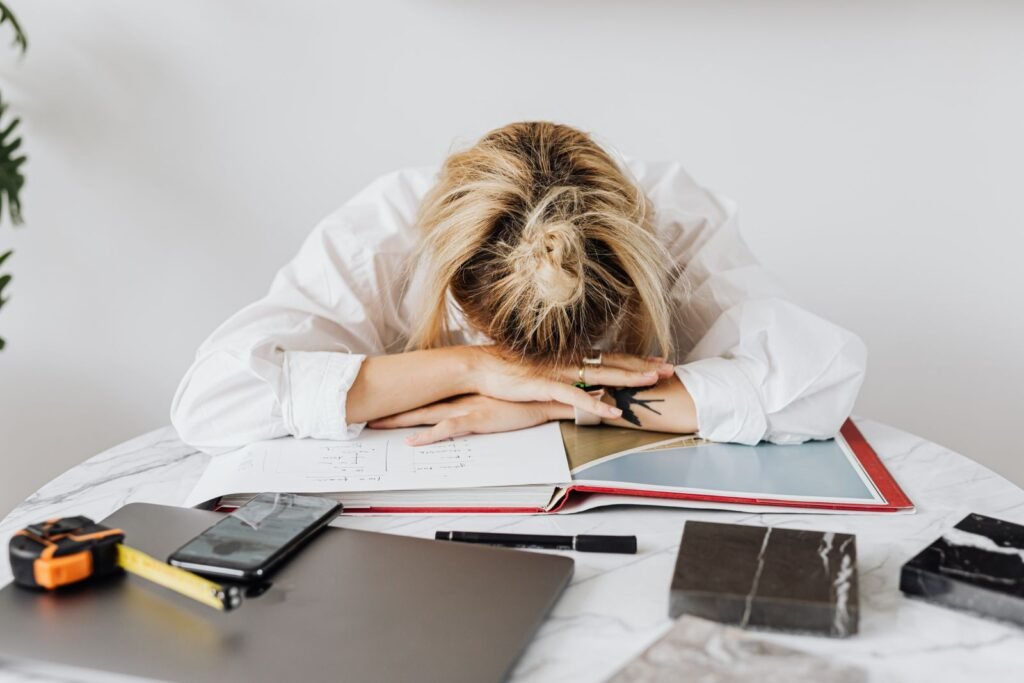
Signs you’re not getting enough deep sleep include waking up tired despite a full night’s sleep, relying heavily on caffeine to function, frequent waking during the night, difficulty with memory or focus, slower recovery from exercise, increased cravings for sugar and carbs, and a general sense of sluggishness that doesn’t improve with more total sleep hours.
It’s entirely possible to spend eight hours in bed and still not get enough deep sleep specifically, which is why total sleep duration alone doesn’t tell the full story. Here’s what typically signals a deep sleep shortfall.
1. Waking Up Tired Despite Adequate Hours
If you’re consistently sleeping seven to eight hours but still wake up feeling unrested, this is one of the clearest indicators that you’re not spending enough time in deep sleep specifically, since this stage is responsible for feeling genuinely restored.
2. Relying Heavily on Caffeine to Function
Needing caffeine just to reach a baseline level of alertness, rather than simply enjoying it, often points to insufficient deep sleep rather than a total sleep quantity problem.
3. Frequent Waking During the Night
Waking up multiple times, even briefly, disrupts the sleep cycles needed to reach and sustain deep sleep stages, since the body needs to progress through lighter stages again each time before returning to deep sleep.
4. Difficulty With Memory or Focus
Deep sleep plays a significant role in memory consolidation and cognitive function. Persistent brain fog or difficulty concentrating, despite adequate total sleep time, is commonly linked to insufficient deep sleep.
5. Slower Recovery From Exercise
- Muscle soreness lasting longer than expected after workouts
- Feeling more fatigued than usual during exercise you normally handle easily
- Reduced physical performance despite consistent training
6. Increased Cravings for Sugar and Carbs
Deep sleep plays a role in regulating hunger hormones. Insufficient deep sleep is commonly associated with increased cravings for sugary or high-carb foods the following day.
7. General Sluggishness That Persists
A pervasive sense of low energy that doesn’t improve even after what feels like adequate sleep duration is often the clearest sign that sleep quality, specifically deep sleep, is the actual issue rather than sleep quantity.
Supporting Deeper Sleep Naturally
Alongside consistent sleep habits covered in our guide on how to get deeper sleep naturally, some people incorporate supplements like Renew, formulated with melatonin, L-theanine, and ashwagandha to support relaxation and deeper, more restorative sleep cycles.
When to See a Doctor
Any combination of these signs, especially alongside loud snoring, gasping during sleep, or excessive daytime sleepiness, is worth having evaluated by a doctor, since these can sometimes indicate an underlying sleep disorder like sleep apnea that needs proper diagnosis and treatment.
Frequently Asked Questions
Can wearable sleep trackers accurately measure deep sleep
Consumer sleep trackers can provide useful general trends, but they’re not as precise as clinical sleep studies for measuring exact deep sleep stages, so treat the data as a helpful indicator rather than a diagnostic tool.
Does age affect how much deep sleep I get
Yes, deep sleep naturally decreases with age, which is part of why older adults sometimes report feeling less rested even with similar total sleep duration compared to when they were younger.
How long does it take to notice improvement in deep sleep quality
With consistent habit changes, many people notice some improvement within one to two weeks, though significant shifts often take three to four weeks of consistency.

Roshan Rao is a wellness researcher who writes practical, research-based guides on health, sleep and family life.